How Hard Is San Antonio’s Water? (And Why It’s Destroying Your Appliances)
If you live in and around San Antonio, hard water is likely already affecting your home—leaving white scale on fixtures, spotting your dishes, and slowly building up inside your appliances. Over time, this mineral buildup can reduce efficiency, increase cleaning and soap use, and contribute to costly repairs. San Antonio’s water is considered very hard, typically measuring 15 to 20 grains per gallon according to the San Antonio Water System.
For homeowners, this matters because hard water flows through the entire plumbing system and into water heaters, dishwashers, washing machines, faucets, showerheads, and other water-using appliances.
Over time, calcium and magnesium can leave mineral scale behind.
The result may be more cleaning, reduced water flow at fixtures, increased soap use, and scale buildup inside household equipment.
How Hard Is the Water in San Antonio?

San Antonio water is considered very hard.
Water hardness is caused primarily by dissolved calcium and magnesium. As groundwater moves through rock and underground formations, it naturally picks up minerals. San Antonio receives water from several sources, including aquifers.
Water hardness is commonly measured in grains per gallon, or gpg. SAWS reports typical hardness levels of approximately 15 to 20 grains per gallon. To put that in perspective, water above 180 milligrams per liter is classified by the U.S. Geological Survey as very hard.
San Antonio’s typical hardness range is well within the very hard water category.
Why Does San Antonio Have Hard Water?
San Antonio’s hard water is largely connected to the area’s geology and groundwater sources. Water moving through mineral-rich rock dissolves small amounts of calcium and magnesium. Those minerals remain dissolved in the water as it enters the municipal water system and eventually flows into homes. Hardness minerals are normally invisible when water comes from the faucet.
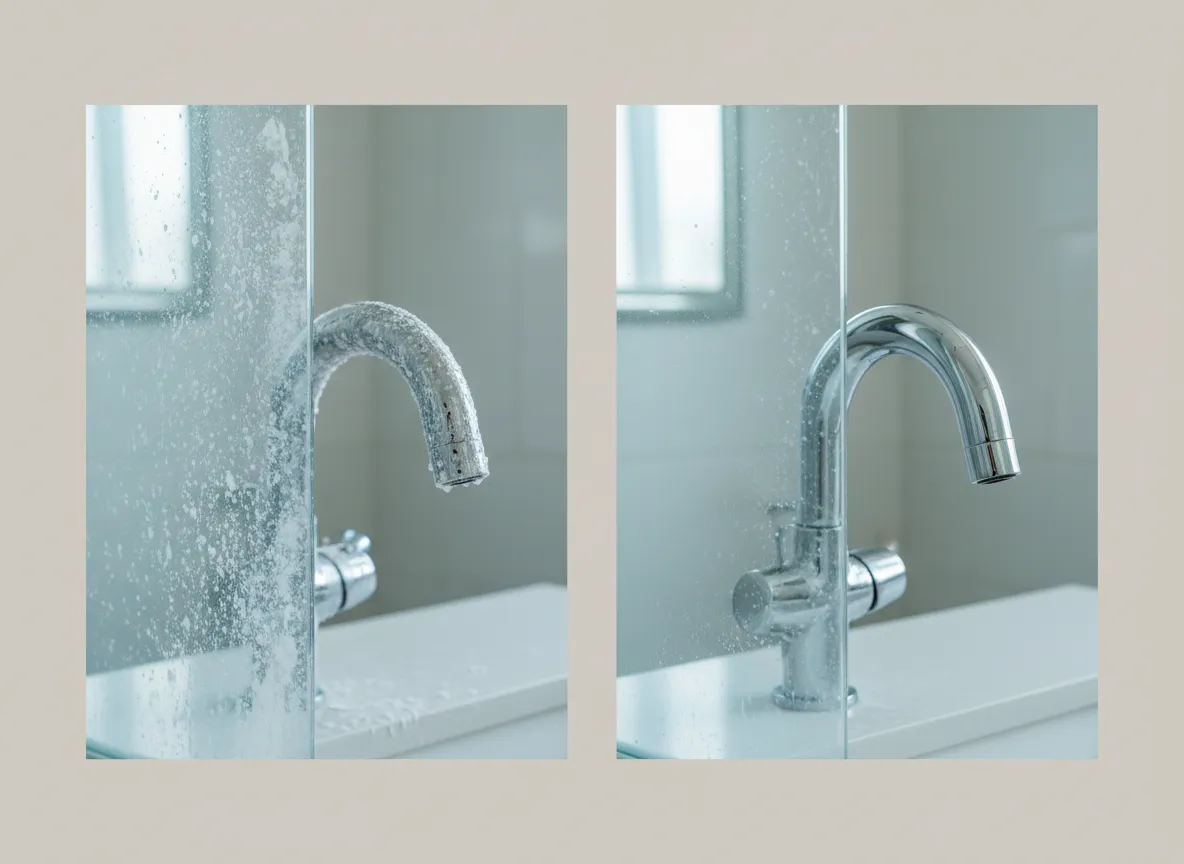
The problems become easier to see after the water is heated or evaporates. When water dries, the water itself disappears but the minerals can remain on the surface. This creates the familiar white scale seen throughout many San Antonio homes.
What Are the Signs of Hard Water in a San Antonio Home?
Common signs of hard water include:
White scale around faucets
Mineral buildup on showerheads
Cloudy shower doors
Spots on dishes and glassware
Restricted faucet aerators
Reduced flow at certain fixtures
Frequent bathroom cleaning
Increased soap and detergent use
Scale inside coffee makers
White spots on vehicles after washing
Mineral buildup involving water heaters and water-using appliances
Hard water problems often develop gradually. A homeowner may not immediately connect a clogged showerhead with spotted dishes or a scaled coffee maker. However, when mineral buildup appears throughout several areas of the home, water hardness may be the common factor.
Why Does Hard Water Leave White Scale?
Hard water contains dissolved calcium and magnesium. When water evaporates, these minerals can remain on the surface. This is why white scale repeatedly appears on faucets, sinks, shower glass, and other fixtures.
The same process can happen inside household equipment. Minerals may collect on heating surfaces, valves, and small water passages. Cleaning a faucet removes visible scale. It does not remove hardness minerals from the water entering the home.
If hard water continues flowing through the plumbing, the buildup may return.
Can Hard Water Damage Appliances?
Hard water can contribute to scale buildup inside water-using appliances.
Appliances that may be exposed to hard water include:
Water heaters
Dishwashers
Washing machines
Refrigerators and ice makers
Coffee makers
Other water-fed household equipment
Scale can collect on internal components and heating surfaces. The U.S. Geological Survey notes that mineral scale can impede water flow and reduce the efficiency of heating equipment.
Hard water should not automatically be blamed for every appliance failure. Appliances can fail because of age, electrical problems, defective components, installation issues, or other mechanical problems.
However, in a very hard water area such as San Antonio, mineral scale is an important factor to consider when evaluating repeated problems with water-using appliances.
How Does Hard Water Affect a Water Heater?
Water heaters are especially exposed to hard water because they continuously heat mineral-containing water. Heating hard water can encourage calcium carbonate deposits to form. These deposits may accumulate as scale or sediment inside the water heater.
In electric water heaters, mineral accumulation around heating elements may reduce heat transfer and place additional stress on the equipment. Because the buildup occurs inside the tank, homeowners may not know it is happening.
A water heater may continue producing hot water while scale accumulates internally. Leaks or water heater failures should always be properly diagnosed. Hard water is not the only cause of water heater problems.
However, San Antonio homeowners should understand that years of very hard water can contribute to mineral accumulation inside water-heating equipment.
Can Hard Water Cause Low Water Pressure?
Hard water can contribute to reduced water flow. This does not always mean the entire home has a municipal water pressure problem. Mineral deposits can accumulate around the small openings in showerheads and faucet aerators. As these openings become restricted, less water may pass through. The homeowner experiences weaker flow and may describe the problem as low water pressure.
Cleaning or replacing the fixture may temporarily improve the flow. However, if hard water continues entering the home, mineral buildup may eventually return.
Scale can also contribute to restrictions inside plumbing over time.
Why Does Hard Water Make Dishes Look Cloudy?
Hard water can leave mineral spots and film on dishes and glassware. During the dishwasher cycle, water contacts the dishes. When the remaining water dries, calcium and magnesium deposits may remain. This can make glasses appear cloudy or spotted even after they have been washed.
Homeowners sometimes respond by using more detergent or repeatedly washing dishes. The dishwasher may not necessarily be dirty or broken. The mineral content of the water may be contributing to the problem.
Does Hard Water Make You Use More Soap?
Yes, hard water can interfere with the cleaning action of soap. Calcium and magnesium react with soap and may make it more difficult to create an effective lather.
As a result, homeowners may use more:
Shampoo
Body wash
Hand soap
Dishwashing products
Laundry detergent
Household cleaning products
The additional product use may happen slowly and may not be noticed. Over time, however, the cost of extra soaps, detergents, and cleaning products can add up.
Why Does San Antonio Water Leave Spots on Cars?
Hard water can leave visible mineral spots on vehicles after washing. When hard water dries on a car, the water evaporates while calcium and magnesium remain on the surface. This creates white or cloudy water spots. The same process that creates scale on shower glass can create spots on a vehicle. Allowing hard water to dry on the surface can make the spots more noticeable. This is why some San Antonio homeowners find themselves washing or detailing vehicles repeatedly.
Is San Antonio Hard Water Safe to Drink?
Hard water does not automatically mean water is unsafe to drink. Water hardness is primarily related to naturally occurring calcium and magnesium. SAWS monitors San Antonio drinking water and publishes annual water quality reports based on federal drinking-water requirements. The main concerns associated with hard water in a home are often practical rather than safety-related. Hard water may contribute to scale, soap problems, mineral residue, restricted fixtures, and buildup in water-using equipment. Drinking-water safety and water hardness are separate issues.
Will a Reverse Osmosis System Fix Hard Water?
A typical under-sink reverse osmosis system does not solve a whole-house hard water problem. Reverse osmosis systems are commonly used to treat drinking and cooking water at a specific location. An RO system installed under the kitchen sink may provide treated water to a dedicated faucet and sometimes a refrigerator.
However, it does not treat water flowing to:
Showers
Bathroom faucets
Washing machines
Water heaters
Dishwashers
Outdoor faucets
A point-of-use RO system and a whole-house water softener perform different functions. Homeowners should understand which areas of the home are being treated before purchasing equipment.
What Is the Difference Between a Water Filter and a Water Softener?
A water softener is specifically designed to address hardness minerals. Traditional ion-exchange water softeners reduce calcium and magnesium by exchanging them with sodium or potassium ions.
Water filters vary widely. Depending on the filter media and design, a filtration system may be intended to reduce sediment, chlorine, taste, odor, or specific substances.
A water filter should not automatically be assumed to soften water.
Before choosing water treatment equipment, homeowners should ask:
What does the system remove or reduce?
Does it address calcium and magnesium hardness?
Is it treating one faucet or the entire home?
What water problem is the system designed to solve?
Clear answers to these questions make it easier to compare water treatment systems.
Should San Antonio Homeowners Test Their Water?
San Antonio is widely known for hard water, and SAWS publishes typical hardness levels. However, a home water hardness test can still provide useful information. Water conditions may vary depending on water source and service area. A hardness test provides a measurable result that can help homeowners understand the severity of hardness at their home.
Testing can also help homeowners evaluate water treatment recommendations. Instead of relying on statements such as “your water is bad,” ask for the actual hardness result.
Homeowners should understand:
What was tested
What the result means
Which problem is being addressed
How the proposed treatment works
How Can Homeowners Avoid Water Treatment Sales Pressure?
Hard water is a common San Antonio problem, but homeowners should still take time to understand any recommended treatment.
Be cautious when a water treatment company:
Uses fear to create urgency
Refuses to explain test results
Claims one system solves every water problem
Does not explain the difference between filtration and softening
Pressures homeowners to sign immediately
Cannot clearly explain what the equipment reduces or removes
Homeowners do not need advanced water chemistry knowledge. They should simply understand the problem and the purpose of the recommended equipment.
What Should You Do If You Think You Have Hard Water?
Start by looking for patterns throughout the home.
Inspect faucets and showerheads for scale.
Look at shower glass and dishes for mineral spots.
Check whether fixture flow is becoming restricted.
Think about how often the household purchases soap, detergent, and cleaning products.
Consider the history of the water heater and other water-using appliances.
Review San Antonio water quality information from SAWS.
A water hardness test can provide an actual hardness number for the home.
For leaks, unusual odors, or appliance failures, have the specific problem properly diagnosed. Hard water may be a contributing factor, but it should not be used as an automatic explanation for every plumbing or equipment problem.
The Bottom Line: San Antonio Has Very Hard Water
San Antonio water typically measures approximately 15 to 20 grains per gallon of hardness, placing it in the very hard water range.
For homeowners, the effects often appear as repeated everyday problems.
White scale.
Spotted dishes.
Cloudy shower glass.
Clogged showerheads.
More cleaning.
More soap.
Mineral buildup inside water-using equipment.
These signs may seem unrelated until homeowners understand how calcium and magnesium behave as hard water moves through a home.
The best first step is education.
Understand the hardness of the water.
Learn the difference between a water softener, a water filter, and a reverse osmosis system.
Ask what a treatment system actually removes or reduces.
And make sure the solution matches the water problem.
San Antonio's hard water is easier to deal with once you understand what is doing inside your home.