Reverse Osmosis Systems for San Antonio Homes What You Need to Know
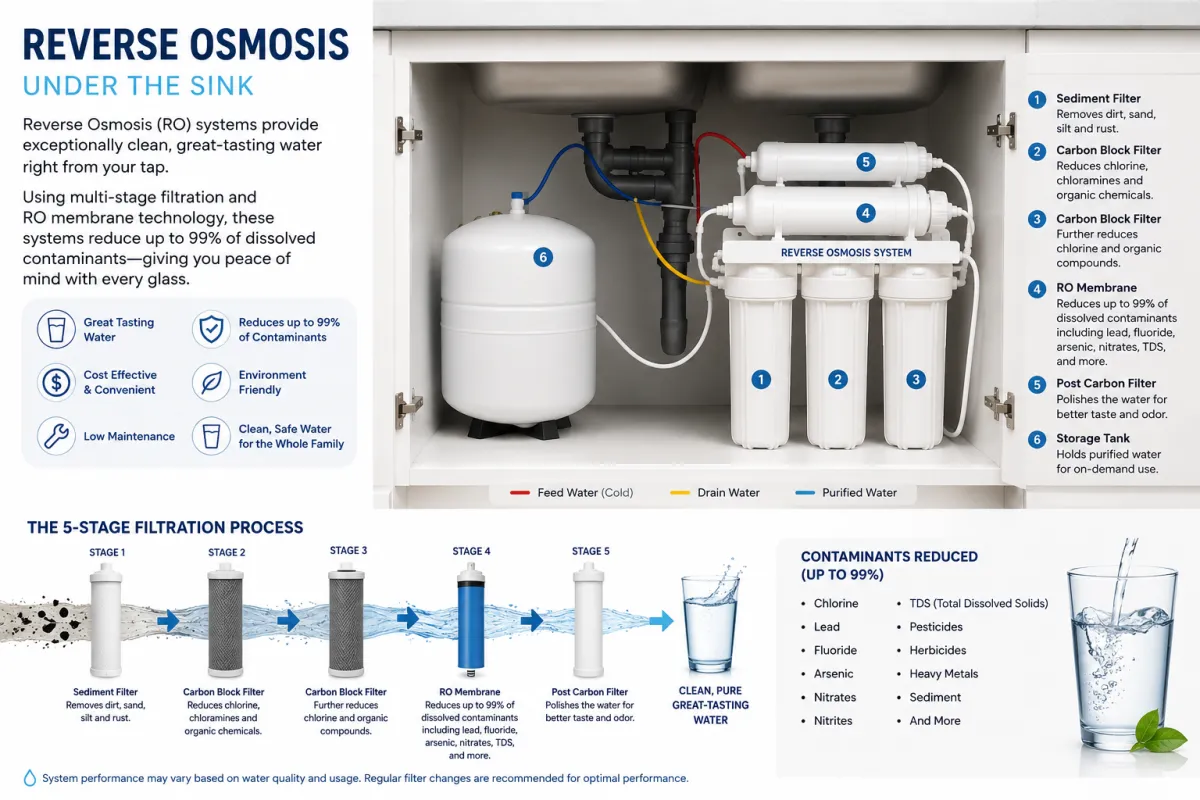
Reverse osmosis can provide cleaner, better-tasting water for drinking, cooking, coffee, tea, and ice. In San Antonio homes, it is usually installed under the kitchen sink and connected to a separate drinking-water faucet.
It is different from a whole-house water softener because it treats a smaller amount of water for consumption rather than all the water used for showers, laundry, plumbing, and appliances.
AGM Water Softening Systems offers a standard five-stage reverse osmosis system as an optional addition. Not every household needs RO, and we do not automatically include it with every water softener. The best decision depends on the homeowner's drinking-water goals, available space, maintenance expectations, and comfort with the extra water used during purification.
What Is Reverse Osmosis
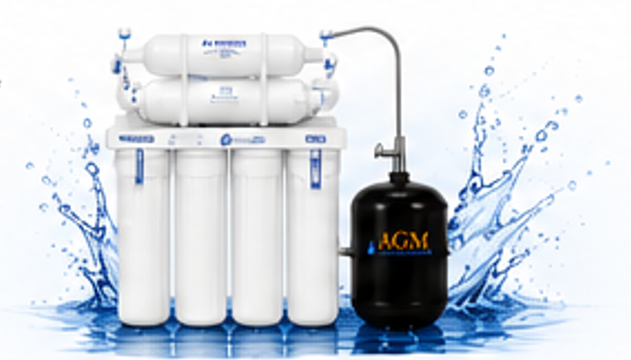
Reverse osmosis, often shortened to RO, is a water-treatment process that pushes water through a very fine membrane.
The membrane allows treated water to pass while many dissolved substances are separated and flushed away. The system then sends the treated water to a small storage tank so it is ready when the dedicated faucet is opened.
An RO system normally uses several treatment stages rather than only the membrane. AGM's standard five-stage system uses pre-filters to protect the membrane, the RO membrane for the main separation process, and final filtration to improve the water before it reaches the faucet.
The exact performance depends on the condition of the incoming water, water pressure, filter condition, membrane condition, and system design.
How RO Is Different From a Water Softener
A water softener and an RO system have different jobs.A salt-based softener removes hardness minerals such as calcium and magnesium through ion exchange.
It treats the home's main water supply and helps reduce scale, white spots, soap residue, and mineral buildup in plumbing and appliances.
Water Softener vs. Reverse Osmosis: What’s the Difference?
Water softener: Treats the home's main water supply and helps reduce hardness-related scale, white spots, soap residue, and mineral buildup.
Reverse osmosis (RO): Focuses on drinking and cooking water at one location and can reduce many dissolved substances that a softener is not designed to remove.
RO should not be expected to solve whole-house hardness. Installing RO only at the kitchen sink will not prevent scale in showers, water heaters, washing machines, or the rest of the plumbing. For those concerns, a correctly sized whole-house softener is the more direct solution.
Why San Antonio Homeowners Choose RO

Many homeowners choose RO because they want water that tastes cleaner at the kitchen sink. Chlorine taste, odor, or the general flavor of tap water may lead a family to buy bottled water.
A properly maintained RO system provides treated water at home and can reduce the inconvenience of storing, carrying, and disposing of bottles.
RO water is useful for drinking, cooking, coffee, tea, and ice. Because the system treats water at the point of use, the household reserves the highest level of treatment for the water it consumes.
The whole-house system can handle hardness and broader household needs, while RO handles the smaller drinking-water supply.
Homeowners should avoid medical or absolute purity claims. No treatment system should be described as removing everything under every condition. If a family has a specific health-related concern or a known contaminant, appropriate laboratory testing and professional guidance are important before selecting equipment.
What the Five Stages Do
In a typical five-stage RO design, the first stage captures sediment that could clog later components. Carbon pre-filtration then helps reduce chlorine and other substances that may affect taste, odor, or membrane life.
The RO membrane performs the main separation step. A final carbon stage polishes the water before it reaches the dedicated faucet.
The stages work together, so regular filter replacement matters. If pre-filters are left in service too long, they may restrict flow and provide less protection for the membrane. If the membrane becomes worn or fouled, water quality and production may decline.
The system should be serviced according to its actual use, incoming water conditions, and manufacturer recommendations.
Does Reverse Osmosis Waste Water

RO uses additional water to carry separated substances away from the membrane and into the drain.
This flushing is part of how the treatment process works. The amount varies with system efficiency, incoming pressure, temperature, membrane condition, and maintenance.
Because of this process, an RO system may increase household water use and can slightly affect the water bill. We believe homeowners should know this before buying.
The benefit is highly treated water for drinking and cooking, but the trade-off is extra water use. Families who rarely drink tap water may decide the convenience is worth it, while others may prefer a simpler drinking-water filter.
RO Maintenance and Filter Changes
An RO system is not maintenance-free. Pre-filters and post-filters require periodic replacement, and the membrane lasts longer but must eventually be changed. The storage tank, faucet, tubing, connections, and drain line should also be checked during service.
The replacement schedule is not exactly the same for every home. Water quality and usage make a difference. Warning signs may include:
Slow production
A change in taste or odor
Unusual drain flow
Low pressure at the RO faucet
Leaks under the sink
Homeowners should not ignore these signs or continue using overdue filters indefinitely.
Keeping the whole-house softener working properly may help reduce hardness reaching the RO membrane. Proper pressure is also important. Professional installation and routine maintenance protect performance and help prevent leaks inside the cabinet.
What Installation Involves

A standard tank-style RO system is normally placed under the kitchen sink.
The installer needs space for the filter assembly and storage tank, access to the cold-water line, a drain connection, and a location for the dedicated faucet. Some countertops or sinks already have an available opening; others may require careful drilling.
Before installation, homeowners should clear the cabinet and mention any garbage disposal, unusual plumbing, leak, or limited space.
The installer should test the connections and explain how the faucet and storage tank operate.
AGM's standard five-stage RO system is currently offered as a $700 add-on; customers should confirm current pricing and exactly what their installation includes before scheduling.
Do You Need Both RO and a Water Softener
Many San Antonio households benefit from both because the systems perform separate jobs. The softener treats hard water throughout the home. RO provides more refined treatment for drinking and cooking water at the kitchen sink.
Together, they can address scale and household protection while improving drinking-water taste.
However, both systems are not required for every homeowner. A person satisfied with the taste of tap water may choose only a whole-house softener. Another household may mainly want RO for drinking water.
The recommendation should be based on the home's water conditions and the family's priorities, not pressure to purchase extra equipment.
Questions to Ask Before Buying
How many treatment stages does the system have?
Where will it be installed, and who will service it?
What do replacement filters cost?
Is there enough cabinet space for the system?
Are the faucet, storage tank, tubing, membrane, filters, labor, testing, and cleanup all included?
What is the expected water use and production?
What are the incoming pressure requirements?
What warranty coverage is included?
What is the recommended maintenance schedule?
The Bottom Line
Reverse osmosis is a practical option for San Antonio homeowners who want cleaner-tasting water for drinking and cooking at the kitchen sink. It is not a replacement for whole-house softening, and it does require filter changes, membrane care, cabinet space, and additional water during operation.
AGM Water Softening Systems offers a standard five-stage RO system only when it fits the homeowner's goals. Our approach is to explain the benefits and trade-offs in simple language, without pressure.
Contact AGM to discuss your water concerns and decide whether a whole-house softener, RO drinking-water system, or combination is right for your home.