Whole House Water Filtration vs Water Softener Systems in San Antonio
San Antonio homeowners often ask whether they need a whole-house water filter or a water softener. The short answer is that these systems solve different water problems.
A water softener removes hardness minerals such as calcium and magnesium. A whole-house filter targets other concerns, which may include sediment, chlorine, taste, and odor, depending on the type of filter media used.
Because one system does not automatically perform the job of the other, many local homes benefit from a combined treatment approach. The correct choice depends on the home's water conditions, plumbing, number of bathrooms, household demand, and the results the homeowner wants. Understanding the difference helps you avoid paying for equipment that does not solve your actual problem.
Why San Antonio Homes Need the Right Treatment
San Antonio is well known for hard water. As water travels through mineral-rich ground, it picks up calcium and magnesium. These minerals are not usually the reason for an unpleasant chlorine smell or visible dirt in the water, but they can create:
white deposits on faucets, shower glass, dishes, and fixtures
collect inside pipes, water heaters, and appliances
Hard water can make soap and shampoo less effective. Homeowners may:
use more product
notice residue in the shower
feel that their skin and hair are dry
Some people try vinegar or store-bought cleaners. Those products may remove existing surface deposits, but they do not treat the hard water entering the home every day.
Filtration concerns are different. A homeowner may notice:
a chlorine taste or smell
sediment
other unwanted characteristics
Those concerns require the correct filtration media. This is why a company should first identify what the homeowner is experiencing instead of calling every piece of water-treatment equipment a filter or a softener.
What a Water Softener Does
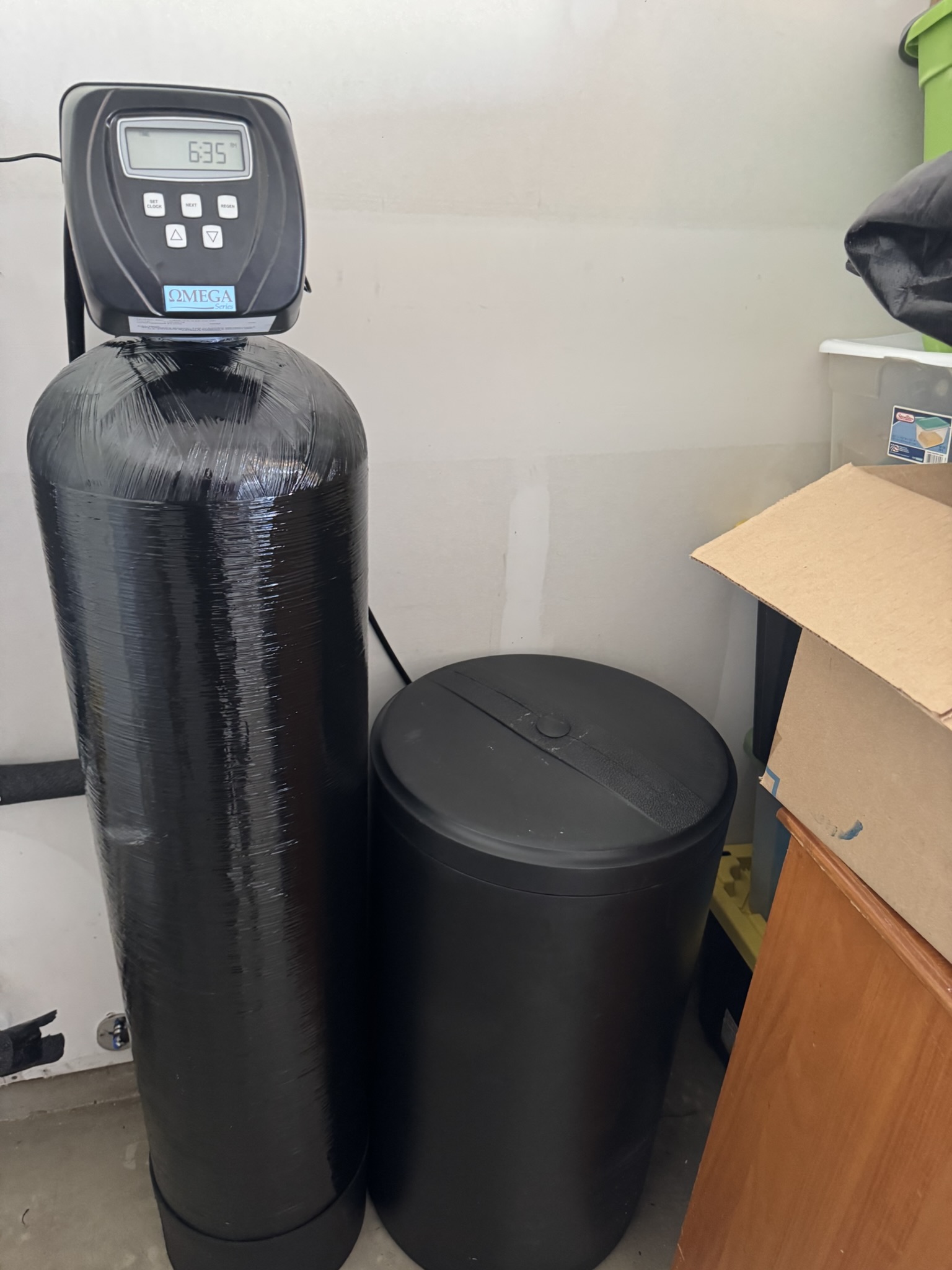
A traditional salt-based water softener uses ion exchange. Water flows through a mineral tank containing resin.
The resin attracts hardness minerals, mainly calcium and magnesium, and exchanges them for sodium ions. The softened water then travels through the home's plumbing.
After the resin reaches its treatment capacity, the system regenerates. During regeneration, salt solution from the brine tank cleans the resin so it can continue treating water.
The system sends the removed hardness minerals and rinse water to the drain. A properly programmed unit normally performs this process automatically.
The main purpose of a softener is hardness removal. Its benefits can include:
fewer white spots
less scale
better soap performance
softer-feeling skin and hair
protection for plumbing and water-using appliances
Proper sizing matters. A unit that is too small may regenerate too often or struggle during heavy household use. AGM normally considers:
bathrooms
regular users
water conditions
expected flow
when recommending capacity.
What a Whole House Water Filter Does
A whole-house water filter treats water where it enters the home, before the water is divided among showers, sinks, toilets, laundry, and appliances. Unlike a small drinking-water filter at one faucet, it can improve water characteristics throughout the house.
The words whole-house filter describe where the equipment treats the water, not exactly what it removes. Performance depends on the filter media and design. A sediment filter may capture sand, rust, or other particles.
Activated carbon may reduce chlorine and improve taste and odor. Specialized media may be selected for other verified concerns. Homeowners should ask what the proposed media is designed to address rather than assuming every filter removes everything.
A standard whole-house filter does not necessarily soften water. If it reduces chlorine or catches sediment but does not remove calcium and magnesium, hard-water scale can remain. Likewise, a softener may remove hardness very effectively but may not provide the chlorine, taste, or odor reduction a homeowner expects from filtration.
Water Softener and Filtration Compared

The simplest way to compare the two is to start with the problem. White crust on faucets, spots on shower doors, poor soap performance, and mineral buildup point toward hardness.
A chlorine smell, unpleasant taste, or visible particles point toward filtration needs. Sometimes a household notices both groups of problems.
A softener uses resin and salt to remove hardness through ion exchange. A filter uses media selected for particular contaminants or water-quality concerns. A softener requires salt and periodic regeneration. Filter maintenance depends on its design and may involve cartridge or media replacement. Both systems must be sized for the home's flow so water pressure is not unnecessarily restricted.
Neither name alone guarantees water quality. Homeowners should ask for:
the exact treatment method
media
flow rate
maintenance schedule
warranty
service support
A clear proposal should explain what the system will do, what it will not do, and whether it treats the whole house or only one faucet.
What About Salt Free Conditioners
A salt-free conditioner is sometimes marketed as a water softener, but the treatment is not the same. Conditioning may change the way hardness minerals behave so they are less likely to attach to surfaces. However, the calcium and magnesium generally remain in the water. This means a conditioner does not create truly softened water through ion exchange.
Salt-free treatment may be suitable for a homeowner whose main goal is scale management and who does not want to use salt. However, expectations must be clear.
If the homeowner wants hardness minerals removed, fewer spots, stronger soap lather, and the familiar feel of softened water, a salt-based ion-exchange system is usually the more direct solution for San Antonio conditions.
Why Many Homes Benefit From Combined Treatment
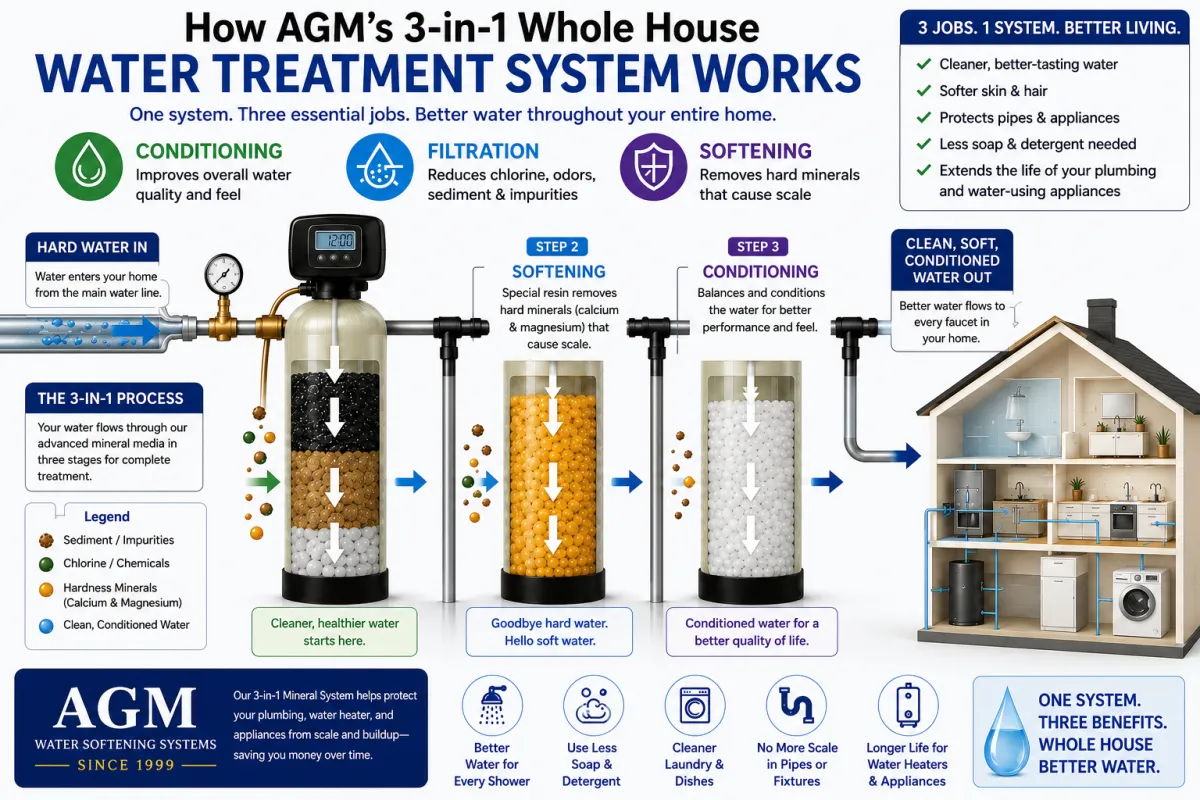
A combined system can address more than one water concern. AGM's 3-in-1 approach brings together softening, filtration, and conditioning in a whole-house treatment design.
The softening portion removes calcium and magnesium. Filtration media can reduce concerns such as chlorine, odor, or sediment according to the system configuration. Conditioning supports the overall treatment goal and water quality throughout the home.
This does not mean every home automatically needs the same equipment. One property may mainly need hardness removal. Another may have strong chlorine concerns in addition to hardness.
A household with a private well may require different testing and treatment from a home on municipal water. The correct recommendation should follow the water problem, not a one-size-fits-all sales package.
AGM's approach is to educate first. We ask about:
the number of bathrooms
household water use
pre-plumbing
prior equipment
pressure concerns
spots
deposits
taste
odor
A free hardness test helps confirm the hardness level. When another concern is suspected, appropriate water testing may be recommended before specialized treatment is selected.
Where Reverse Osmosis Fits
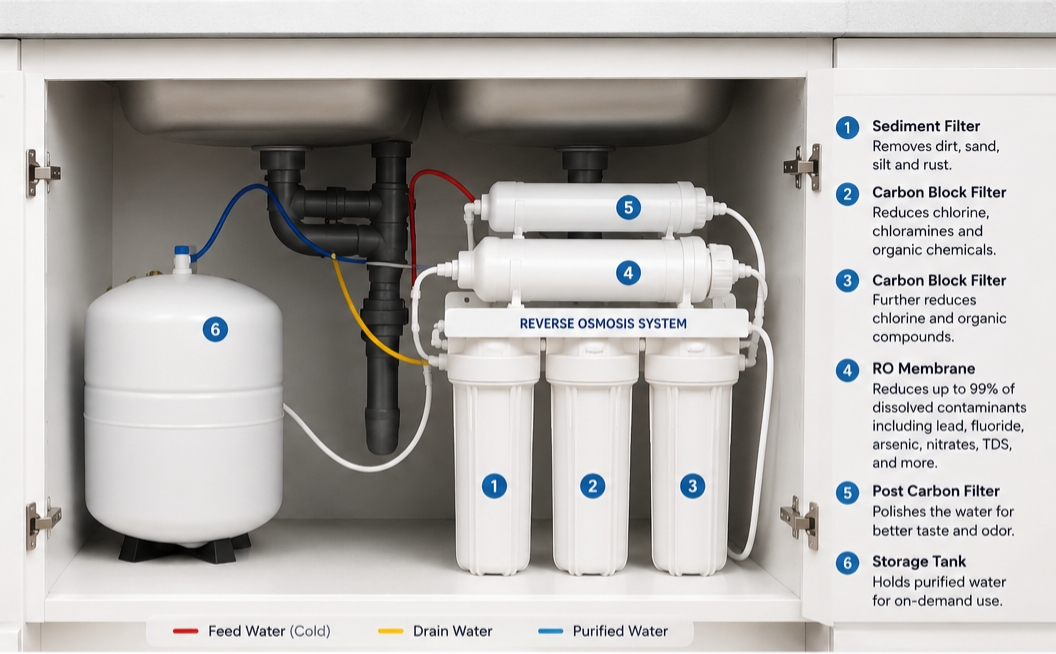
Reverse osmosis, often called RO, is another treatment method, but it is usually used for drinking and cooking water at a dedicated faucet. It pushes water through a membrane and can reduce a broad range of dissolved substances. RO is not normally the first choice for solving whole-house hard-water scale.
A homeowner may choose a whole-house softener or combined treatment system for showers, laundry, plumbing, and appliances, then add RO under the kitchen sink for drinking water.
RO uses additional water during the treatment process and requires filter and membrane maintenance, so it should be selected because the homeowner wants that level of drinking-water treatment, not simply because the home has hard water.
Common Buying Mistakes
One common mistake is purchasing a filter when the real complaint is hardness. The homeowner may notice improved chlorine taste but remain disappointed by white spots and scale. The opposite mistake is buying only a softener and expecting it to remove every taste, odor, particle, or dissolved substance.
Another mistake is choosing equipment by price without comparing capacity and flow rate. A small or restrictive system may not perform well when several showers and appliances operate at the same time. Homeowners should also avoid assuming a lifetime warranty covers every future service call, labor charge, or maintenance item. Warranty terms and service policies should be explained in writing.
Finally, do not select equipment only from a general online water report. A utility report provides useful information about the public supply, but conditions can also be affected by the home's plumbing and location. Testing and a careful discussion of the symptoms give a clearer picture.
Questions to Ask a Water Treatment Company
Before buying, ask the company to identify the problem each piece of equipment is intended to solve.
Does the system remove hardness or only control scale?

What does the filtration media reduce?
How often does it require maintenance?
Are replacement media and parts readily available?
How is the system sized?
What is its expected service flow?
What does the warranty cover?
Who will provide future service?
If the home is not pre-plumbed, does the complete installation quote explain any attic drop, driveway work, or other plumbing route. A trustworthy company should answer in simple language without pressure.
Choosing the Right System for Your Home
Choose a water softener when the main problem is hard-water minerals and scale. Choose whole-house filtration when the goal is to address confirmed sediment, chlorine, taste, odor, or another concern matched to the correct media. Consider combined treatment when the household wants both hardness removal and improved water characteristics throughout the home.
For many San Antonio homeowners, a properly sized salt-based system with appropriate filtration provides the most complete everyday solution. It can deliver soft, treated water to showers, sinks, laundry, and appliances while addressing more than hardness alone. The final design should still reflect the home's actual water, plumbing, and demand.
AGM Water Softening Systems helps homeowners understand the difference before they buy. Our goal is to be an educator, not a high-pressure salesperson. Contact AGM for a free hardness test and a straightforward recommendation for your San Antonio home.