
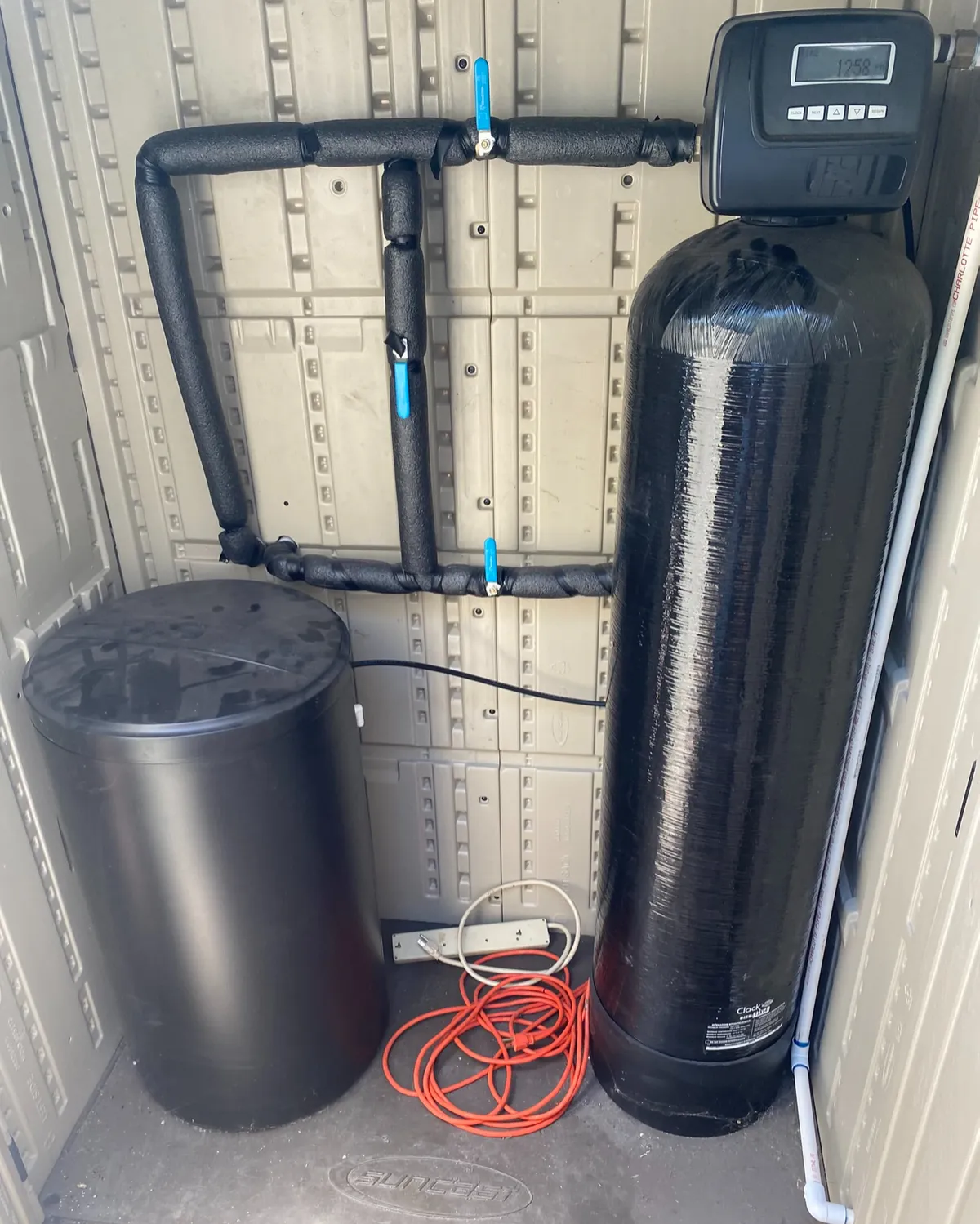
Water Softener Maintenance Tips for San Antonio Homeowners
A properly maintained water softener can continue protecting a San Antonio home from hard-water scale, white spots, soap residue, and mineral buildup. Most day-to-day care is simple: use the correct salt, check the brine tank regularly, watch for changes in water quality, and call for help before changing the system's programming.
Maintenance does not mean taking the control valve apart or constantly adjusting settings. A professionally installed system should regenerate automatically according to its programming.
The homeowner's main job is to provide salt, keep the area clean and accessible, notice warning signs, and arrange service when needed.
Check the Salt Level Regularly
The brine tank supplies the salt solution used to clean and recharge the resin during regeneration. If the tank runs completely out of salt, the system may stop producing properly softened water even though water continues flowing through the house. Check the salt level about once a month.
AGM customers may add up to three bags at one time and often go about three months before adding more, but the exact timing depends on household water use, hardness, and system settings.
Keep the salt below the marked fill line and do not pack the tank completely full. A large family or a home using more water may need salt sooner.
AGM recommends solar salt crystals rather than pellets. Pellets may contain binders that can create residue in the brine tank. Use clean salt intended for water softeners, and keep opened bags dry so moisture does not turn the product into hard clumps before it reaches the tank.
Watch for a Salt Bridge

Sometimes the top layer of salt forms a hard crust while an empty space develops underneath.
This is called a salt bridge. From above, the tank may look full, but the salt is not dropping into the water to make brine. The result can be hard water, spots, or poor soap performance.
When checking the tank, look for salt that seems unusually solid or does not move downward over time. Do not strike the tank or use a sharp metal object that could damage it.
If you are unsure whether the salt has bridged, contact AGM for guidance before attempting to break it apart.
Let the System Regenerate Automatically
Regeneration is the cleaning cycle that restores the resin's ability to remove calcium and magnesium. The control valve moves through several steps, draws brine from the salt tank, rinses the media, and returns the system to normal service.
This often happens during low-use hours, so homeowners may not notice it. Water running to the drain or mechanical sounds during a scheduled regeneration can be normal.
However, continuous drain flow, repeated cycling, water that remains salty, or a cycle that never seems to end should be checked.
Avoid unplugging the unit during regeneration unless a technician instructs you to do so.
Do Not Change the Programming Without Guidance
The valve is programmed according to system capacity, water hardness, household demand, and other installation details.
Changing the number of days, hardness setting, capacity, or regeneration schedule without understanding those values can cause poor performance, unnecessary salt use, extra water use, or hard water between cycles.
If your household size changes or you believe the system is regenerating too often or not often enough, call before changing the settings.
AGM currently offers phone troubleshooting for $60. Guided troubleshooting can help determine whether the concern involves programming, salt, water use, or a part that requires an on-site visit.
Look for Changes in Water Quality
The return of familiar hard-water signs may be the first indication that maintenance is needed. Watch for:
White deposits on faucets and shower glass
Spots on dishes
Reduced soap lather
Rough-feeling laundry
A change in how water feels on skin and hair
A single spot does not always mean the softener has failed. Salt may be low, a regeneration may have been interrupted, the bypass may be in the wrong position, or household use may have temporarily exceeded the system's capacity.
Note when the problem started and whether it affects every faucet. That information helps the technician troubleshoot more efficiently.
Pay Attention to Pressure and Unusual Sounds
A correctly sized system should provide enough flow for normal household use. A noticeable drop in water pressure may be related to the softener, but it can also come from the home's plumbing, pressure regulator, municipal supply, clogged fixtures, or another appliance.
Listen for continuous gurgling, repeated cycling, or water running to the drain long after regeneration should have ended.
Look for water around the tanks, wet fittings, a loose drain line, or overflow from the brine tank. If you see an active leak, protect the property and call for service.
Do not force bypass handles or disassemble the valve unless you have been shown how to operate them.
Keep the Installation Area Clear
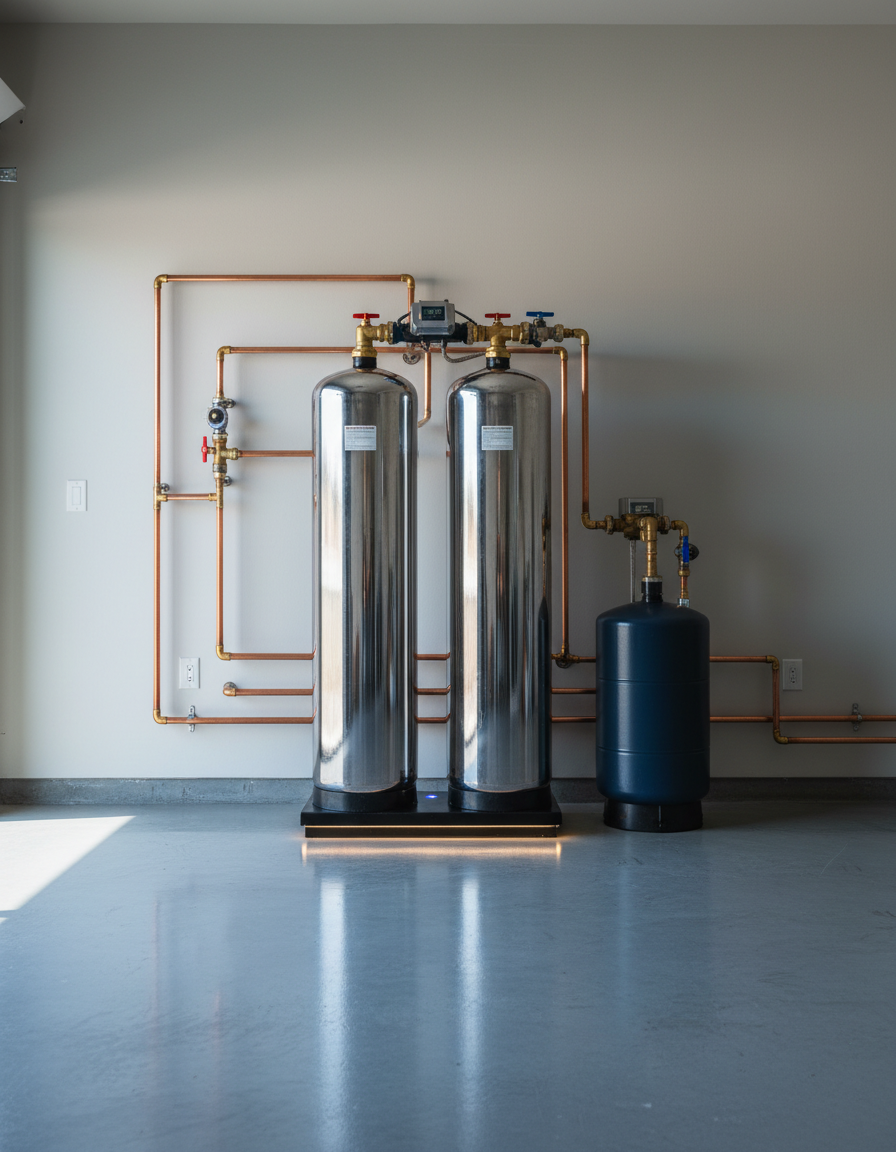
Leave enough space around the equipment for inspection and service, including the:
Mineral tank
Brine tank
Control valve
Electrical connection
Drain line
Do not stack boxes against the equipment or place chemicals, tools, or heavy objects on top of the tanks.
Check that the power cord remains connected and protected from water.
The drain line should not be kinked, crushed, or moved from its proper location.
If landscaping, garage work, flooring, or remodeling is planned near the equipment, contact the installer before disconnecting or relocating anything.
Understand Warranty and Service Coverage
A system warranty normally applies according to its written terms. It does not automatically mean that every future service call, labor charge, maintenance item, salt purchase, or plumbing problem is free.
Homeowners should keep the original agreement and warranty information so they know what is covered.
AGM's current phone troubleshooting fee is $60, and an on-site consultation or service visit is $200. If an older system eventually needs the treatment media replaced, AGM's current rebed price is $1,200. Prices should be confirmed when service is requested because labor, parts, and media costs may change.
When to Schedule Professional Service
Call for help when the system has salt but the water remains hard, the brine tank will not draw or refill properly, the unit leaks, water pressure changes significantly, the drain runs continuously, or the control display shows an error.
Service is also appropriate when the system has been disconnected, moved, left unused for a long period, or affected by plumbing work. Before calling, note the system model if available, when the problem began, the last time salt was added, and whether the issue started after a power outage or repair.
Photos or a short video can sometimes help during phone troubleshooting. Do not erase settings or repeatedly force manual regenerations unless the technician requests it.
A Simple Monthly Maintenance Routine

Once a month, look into the brine tank, confirm that clean solar salt crystals are available, and check for crusting. Walk around the system and look for drips, wet areas, loose tubing, or unusual salt residue.
Notice whether water pressure and water quality feel normal throughout the home. This quick routine can identify small concerns before they become larger repairs.
Keep a simple note of salt additions and service dates. That record makes it easier to recognize changes in salt use, regeneration frequency, and system performance.
The Bottom Line
Water-softener maintenance should be simple and consistent. Check salt monthly, use solar salt crystals, keep the tank below its fill line, watch for a salt bridge, and allow the control valve to perform its automatic regeneration.
Do not change programming or take the valve apart without guidance. AGM Water Softening Systems helps San Antonio homeowners understand and care for their equipment without pressure or confusing language.
If your water feels hard again, the pressure changes, or the system behaves unusually, contact AGM before the problem grows.